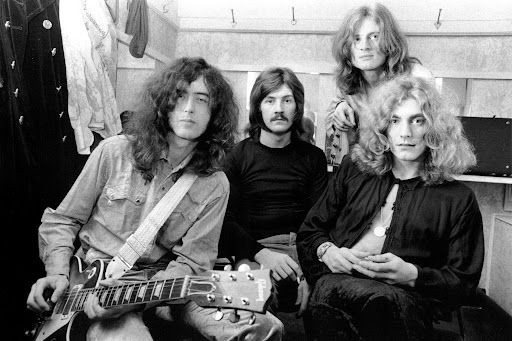
In 1971, Led Zeppelin released “Stairway to Heaven,” an eight-minute epic that quickly became a rock classic. It’s not only the band’s pinnacle, but also a pinnacle in the history of rock music. The phrase “climbing to the top of rock” seems perfectly fitting. The song begins with gentle folk guitar and gradually transitions to a powerful hard rock climax, like a symbolic “mountaineering journey,” each step imbued with the power of exploration and sublimation.
1. A gorgeous transition from folk guitar to hard rock
“Stairway to Heaven,” written by guitarist Jimmy Page, is inherently layered and dramatic. It begins with a gentle folk guitar melody, slowly leading the listener into a peaceful, mystical atmosphere. The guitar notes flow like a gentle breeze, light and flowing, never rushing or impatient. Robert Plant’s voice is like a clear spring, deep and ethereal. The lyrics tell a parable—a woman’s search for a path to “heaven.”
This folk-inspired intro evokes a sense of tranquility, as if wandering through a peaceful forest. However, as the track progresses, the tempo gradually accelerates, and the guitar tones grow increasingly complex, as if the pace of the journey is gathering pace. Gradually, the song intensifies in volume, speed, and intensity, culminating in a thunderous guitar solo. This musical transition from calm to explosive power is the striking quality of “Stairway to Heaven,” masterfully conveying the progression from comfort to intensity, from earthly to heavenly.
2. Robert Plant’s ethereal voice and mysterious lyrics
In addition to Page’s guitar playing, Robert Plant’s voice is also one of the song’s soul. Plant’s voice is ethereal and penetrating, at times gentle as the wind, at others soaring like thunder, perfectly matching the song’s emotional ups and downs. His performance seems more than just singing, but rather an emotional release, imbued with mysterious and ambiguous meanings.
The lyrics themselves are rich in symbolism, imbued with mystical and philosophical undertones. “Stairway to Heaven” tells the story of a man’s quest for a spiritual “paradise.” The line, “There’s a lady who’s sure all that glitters is gold, and she’s buying a stairway to heaven,” has been widely interpreted as a critique of materialism and worldly values, while the “stairway to heaven” symbolizes the path to spiritual transcendence.
The “ladder” in the song symbolizes humanity’s pursuit of a higher spiritual realm, a path that may lead to wisdom, love, or even self-liberation. This metaphorical expression leaves a rich imaginative space in the listener’s mind, becoming a cultural symbol and earning it the love of countless fans.
3. Jimmy Page’s guitar solo: One of the greatest moments in rock history
When you think of “Stairway to Heaven,” almost every rock fan thinks of Jimmy Page’s guitar solo. Page’s solo on the song is considered one of the best of all time. Each note dances on the edge of a precipice, a fusion of technique and emotion. Page’s playing seems to push the limits of the notes, from the most delicate melodies to the most violent outbursts, each transition exquisite and powerful.
This guitar solo isn’t just a display of technique; it’s a continuation of emotion. As the music rises from its initial gentleness to a fierce intensity, Page’s guitar reveals the emotions unleashed from deep within. He uses the guitar to narrate a struggle and sublimation of the soul. This solo, like a fierce emotional storm, pushes the song to a climax, imbuing the entire work with a timeless power.
4. Radio Plays and Urban Legends: A Far-Reaching Impact
Although never officially released as a single, “Stairway to Heaven” became one of rock’s most recognizable songs thanks to its widespread radio play. Its influence transcended musical boundaries and permeated every aspect of pop culture. This frequent radio play not only made the song an icon of rock music, but also catapulted Led Zeppelin’s musical influence to unprecedented heights.
“Stairway to Heaven” has also spawned numerous urban legends, the most famous of which is the “Satanic message” theory. It’s said that if the song is played backward, listeners can hear hidden “Satanic messages.” While this rumor is unfounded, it has greatly enhanced the song’s mystical and sublime qualities, making it a legendary rock song.
5. The pinnacle of rock history: the eternal memory of a generation
“Stairway to Heaven” is not only Led Zeppelin’s signature song; it’s also a milestone in the history of rock music. The song’s structure, emotion, and expressive power reach extremes, showcasing the boundless potential of rock music and cementing Led Zeppelin’s status as a rock legend. The song’s influence extends far beyond the mere act itself, becoming a symbol of rock culture as a whole.
For that generation, “Stairway to Heaven” was more than just a song; it was a symbol of the era, a musical enlightenment. It carried listeners through time and space, guiding them to reach ever greater spiritual heights in the world of music. Because of this song, Led Zeppelin’s name was forever etched at the pinnacle of rock history.
Summarize:
“Stairway to Heaven” is more than just a song; it’s a grand adventure in rock history. From the gentle folk guitar to the intense solos, from Robert Plant’s philosophical lyrics to Jimmy Page’s legendary guitar playing, this song pushes the boundaries of artistry and emotional expression in rock music. It not only earned Led Zeppelin countless accolades, but also established itself as a timeless star in rock culture.